
 Zombie bɛn ne wo?
 Zombie ko
 Tu mmirika boro wɔn
 Kaad mmoaboaano
 Kasa: Twi
 Ma dɔm no aduane (akyɛdeɛ kuruwa)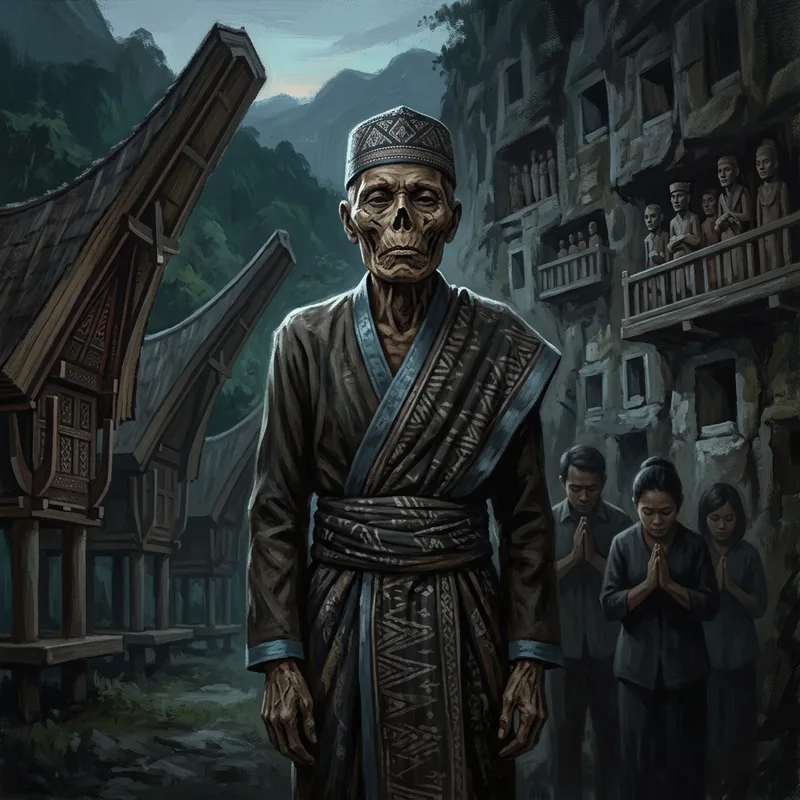
Toraja walking dead
The Toraja of Sulawesi keep their dead close: bodies are preserved, periodically exhumed and paraded in the Ma'nene rite. Around this real practice a story has grown that Torajan corpses can walk home under their own power. Scholars who work in the region say the story is a distortion, spread as Torajans living in cities post photographs of the ritual online. The case shows how a zombie legend can form in the present day around an unfamiliar funeral custom.1
Ɛberɛ bɛn na ɛdii kan puee?
 2009
2009The walking-corpse legend circulated online from 2009; it is attached to the much older Ma'nene ritual
Deɛ fibea no ka
In the Ma'nene ceremony families exhume mummified relatives, wash them, dress them in new clothes and walk them through the village1
A legend tells of defeated Torajan warriors whose corpses walked home1
Photographs of the ritual have repeatedly gone viral as 'real zombies'1
Anthropologist Kathleen Adams calls the walking-dead stories a corrupted version of what the ritual involves1
Fact-checkers have traced specific viral claims to misread photos of Ma'nene1
Wobɛtumi atu mmirika aboro no?
Ahoɔhare kuo a efi sɛnea fibea kyerɛkyerɛ mu (ɛtwetwe ne nan), ɛnyɛ susudua.


Fibea
Asɛm biara a ɛwɔ krataafa yi so fi saa fibea yi mu, na yɛde yɛn ankasa nsɛm na akyerɛw. Wohunuu mfomsoɔ bi? Ka kyerɛ yɛn wɔ [email protected].
 Pocong
 Toyol
Toyol Langsuyar