
 Hvaða uppvakningur ert þú?
 Uppvakningabardagi
 Hlaupa þá af þér
 Spilasafn
 Tungumál: Íslenska
 Gefðu hjörðinni að éta (þjórfékrukka)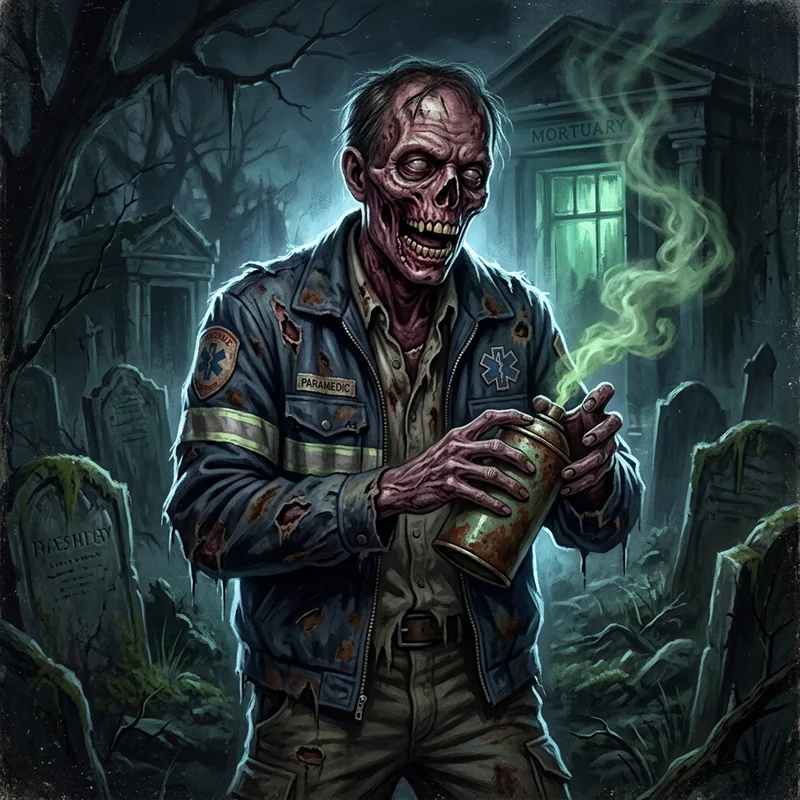
Skrá nr. 120 af 446
Trioxin zombies
Einnig kallaður: 2-4-5 Trioxin zombies
Dan O'Bannon rewrote the script to be as different from Romero's films as possible: its zombies think, speak, survive a punctured brain and want brains rather than flesh. The film is the source of the brain-eating zombie in popular culture. It was made for about 4 million dollars and grossed about 14 million in the US.12
Kom fyrst fram
1985
Released 1985Upprunaverk
The Return of the Living Dead (1985)
Dan O'BannonAldurstakmark
R
Framleitt í
Bandaríkin
Hvað veldur því
Vísindi sem fóru úrskeiðis
Trioxin, a military chemical gas stored in drums, reanimates the dead.Hvernig maður verður einn
Exposure to the gas, or to smoke and rain carrying it, revives corpses; living people who breathe it die slowly while still conscious.
Greind
Klár
Hvenær kom hann fyrst fram?
 1985
1985Released 1985
vettvangsglósur
Hvað heimildir segja
Heimildir
Allar staðreyndir á þessari síðu koma úr þessum heimildum, skrifaðar með okkar eigin orðum. Sástu villu? Sendu okkur línu á [email protected].
 Tarman
 Julie Walker
 Ghouls of Night of the Living Dead
 Thriller zombies
 Zombies of Dawn of the Dead (1978)
 Bub
Bub Deadites
 Jiangshi of Mr. Vampire