
 Uri zombie ripi?
 Hondo yemazombie
 Vatize
 Muunganidzwa wemakadhi
 Mutauro: chiShona
 Fudza mhomho (chipo chemari)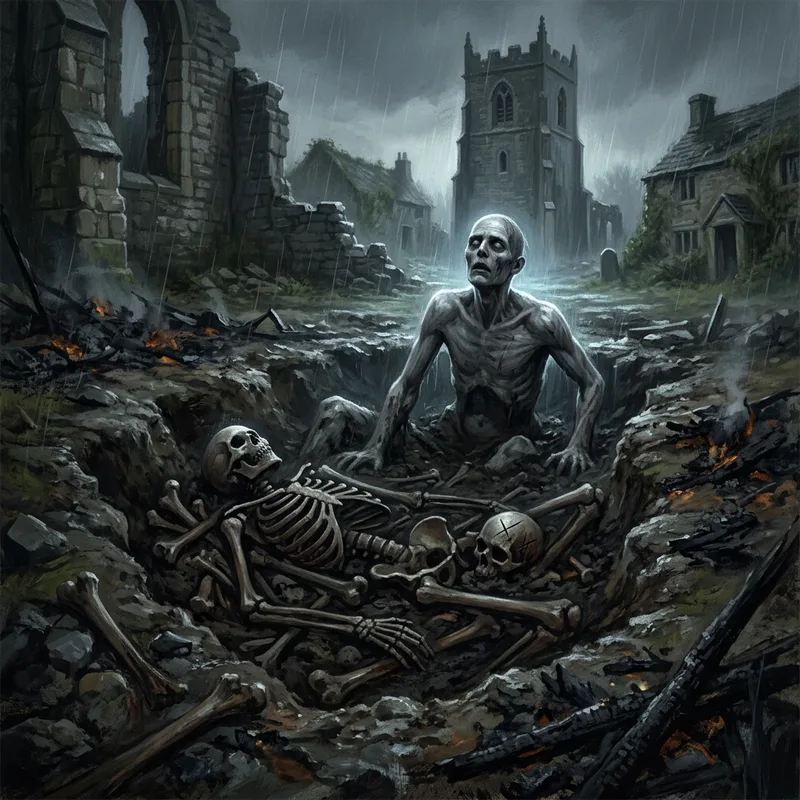
Faira nhamba 013 pa 446
Wharram Percy mutilated dead
Rinonziwo: Wharram Percy revenants
At the deserted medieval village of Wharram Percy in Yorkshire, archaeologists identified human remains that had been beheaded, cut up and burned after death. The 2017 study by Historic England and the University of Southampton concluded that the likeliest explanation was fear of revenants. If so, it is physical evidence from England for the practices that chroniclers such as William of Newburgh describe. It shows ordinary villagers acting on the belief that corpses could rise.12
Kutanga kunyorwa
1100
Bones dated to the 11th-14th centuries; analysed in a study published in 2017Kwakabva
Medieval English
United KingdomChikonzero chacho
Hazvina kumbotsanangurwa
Why these individuals were singled out is not known.Utera
- decapitation
- dismemberment
- burning
- breaking the long bones after death
Rakatanga kuoneka riini?
Nyika yekareNguva dzepakati1500 kusvika 18991900 kusvika 19671968 kusvika 19992000 kusvika 20092010 kusvika nhasi 1100
1100
1100Bones dated to the 11th-14th centuries; analysed in a study published in 2017
zvinyorwa zvemumunda
Zvinotaurwa nezvinyorwa
Zvinyorwa
- Medieval villagers warded off 'zombies' by burning and mutilating human remains, study finds - ScienceAlert
- Revenant - Wikipedia
Chokwadi chese chiri papeji iyi chinobva muzvinyorwa izvi, chakanyorwa nemazwi edu. Waona chikanganiso? Tiudze pa [email protected].
 Abhartach
 Revenant (medieval England)
 Berwick revenant
 Buckinghamshire revenant
 Byland Abbey revenants
 Drakelow revenants
 Draugr
 Vetala
 Glámr
Glámr Upiór
Upiór Asvith
 Haugbúi