
 O zombie efe?
 Ntwa ya di-zombie
 Siana o ba fete
 Kgobokanyo ya dikarata
 Puo: Setswana
 Fepa letshwititi (nkgwana ya madi a tebogo)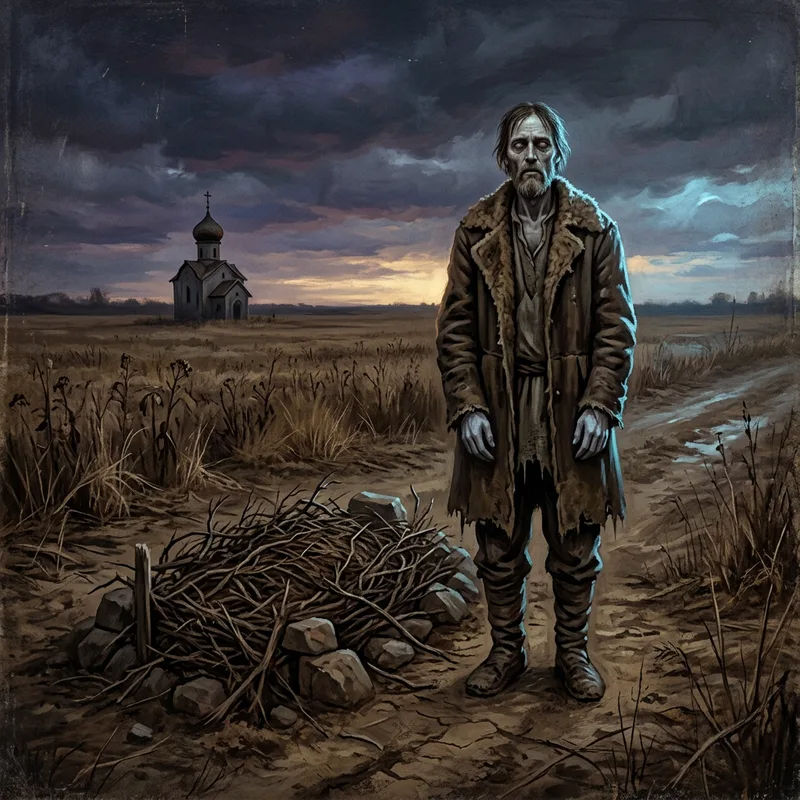
Zalozhnye pokoiniki
Zalozhnye pokoiniki is the ethnographic term for the East Slavic 'unclean dead', those whose manner of death bars them from rest. They were not given normal burial, and in times of drought or plague villagers dug up such bodies and moved or drowned them, a practice churchmen denounced for centuries. The category underlies most Russian and Ukrainian undead, including the upyr and the rusalka. It is a clear statement of the idea, common to zombie folklore worldwide, that a bad death produces a dangerous corpse.1
- burial away from the community: at crossroads, field boundaries, in forests, swamps or ravines
- covering the grave with stones and branches
- exhuming the body and throwing it into a swamp to end a drought
Se metswedi e se buang
Zelenin took the word from Vyatka dialect and linked it to 'blocking up' the grave with branches and stones1
Blamed for droughts, epidemics and cattle disease1
Passers-by threw a stone, twig or handful of earth on such graves1
Special paupers' burial grounds (skudelnitsy) were set aside for them1
Rusalki, mavki and the upyr were all understood as kinds of unclean dead1
Metswedi
Ntlha nngwe le nngwe mo tsebeng e e tswa mo metsweding e, e kwadilwe ka mafoko a rona. O bone phoso? Re bolelele kwa [email protected].
 Upiór
Upiór Mhachkay
 Örek
Örek Ghoul
Ghoul Pocong
 Ro-langs
 Toyol
Toyol Xiangxi walking corpses
 Condenado