
 Watter zombie is jy?
 Zombiegeveg
 Hardloop vinniger as hulle
 Kaartversameling
 Taal: Afrikaans
 Voer die horde (fooitjiepot)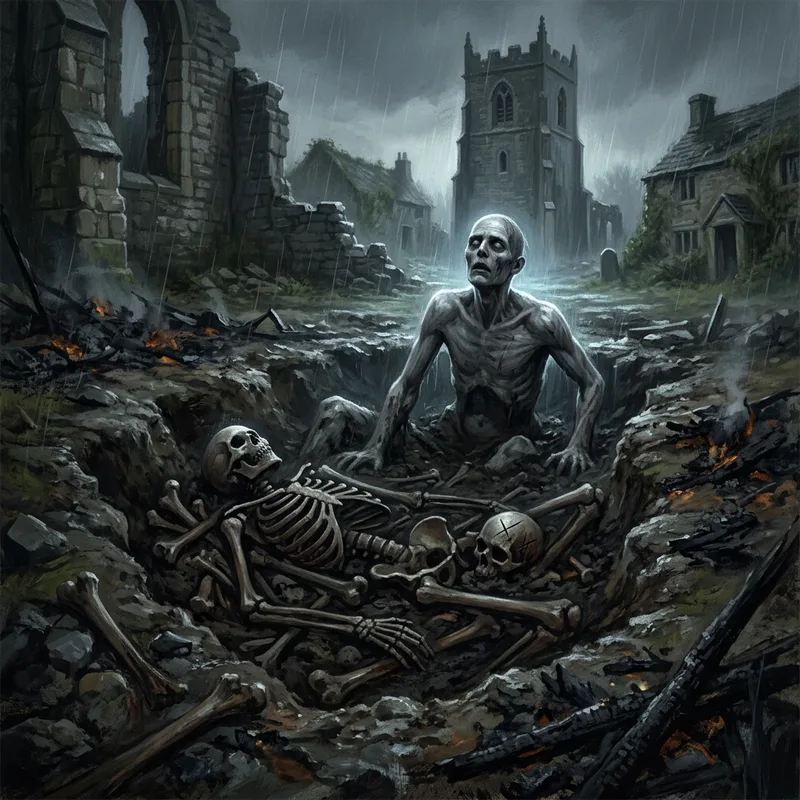
Lêer nr. 013 van 446
Wharram Percy mutilated dead
Ook bekend as: Wharram Percy revenants
At the deserted medieval village of Wharram Percy in Yorkshire, archaeologists identified human remains that had been beheaded, cut up and burned after death. The 2017 study by Historic England and the University of Southampton concluded that the likeliest explanation was fear of revenants. If so, it is physical evidence from England for the practices that chroniclers such as William of Newburgh describe. It shows ordinary villagers acting on the belief that corpses could rise.12
Eerste opgeteken
1100
Bones dated to the 11th-14th centuries; analysed in a study published in 2017Oorsprong
Medieval English
Verenigde KoninkrykWat dit veroorsaak
Nooit verduidelik nie
Why these individuals were singled out is not known.Swak plekke
- decapitation
- dismemberment
- burning
- breaking the long bones after death
Wanneer het dit eerste verskyn?
 1100
1100Bones dated to the 11th-14th centuries; analysed in a study published in 2017
veldnotas
Wat die bronne sê
Bronne
- Medieval villagers warded off 'zombies' by burning and mutilating human remains, study finds - ScienceAlert
- Revenant - Wikipedia
Elke feit op hierdie bladsy kom uit hierdie bronne, in ons eie woorde geskryf. 'n Fout raakgesien? Laat weet ons by [email protected].
 Abhartach
 Revenant (medieval England)
 Berwick revenant
 Buckinghamshire revenant
 Byland Abbey revenants
 Drakelow revenants
 Draugr
 Vetala
 Glámr
Glámr Upiór
Upiór Asvith
 Haugbúi