
 あなたはどのゾンビ?
 ゾンビバトル
 走って振り切る
 カードコレクション
 言語: 日本語
 ゾンビの群れにエサを(チップ箱)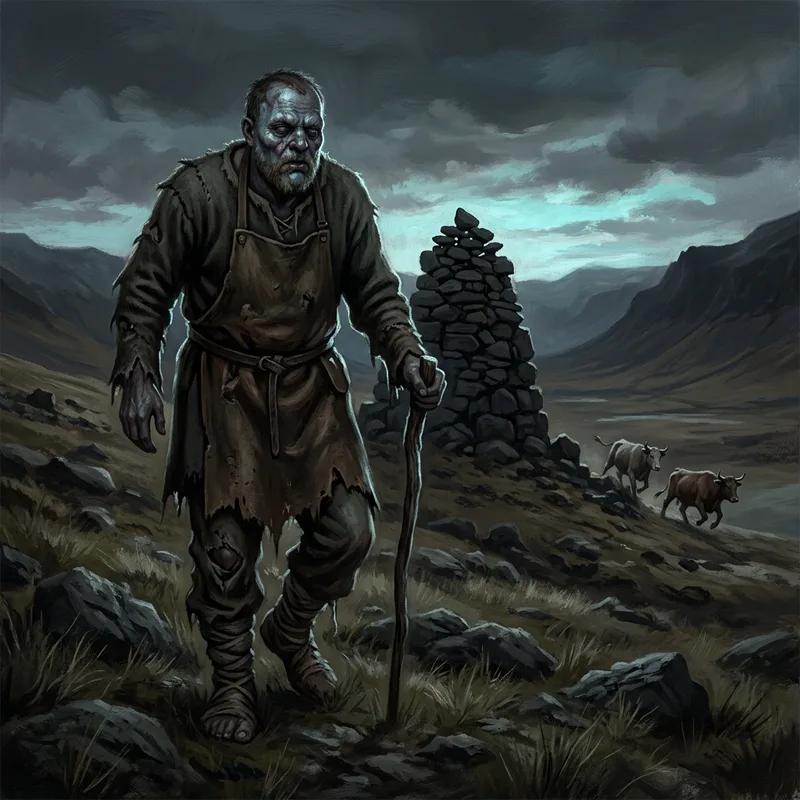
ファイル026/446
Þórólfr bægifótr
別名: Thorolf Twist-Foot, Thorolf Lame-foot, Thorolf Halt-foot
Þórólfr bægifótr is the great contagious revenant of Eyrbyggja saga. After his death the valley empties: animals go mad, a shepherd is found with every bone broken, and his victims join his company. His son Arnkel reburies the corpse on a hillside behind a high wall, and it is later burned. The pattern of an undecayed corpse, spreading death and escalating disposal anticipates the vampire panics of five centuries later.12
最古の記録
1260
Eyrbyggja saga, written in the mid- or late 13th century起源
Norse (Icelandic saga)
アイスランド原因
その他
A violent old man will not lie still after death; the saga offers no further explanation.なり方
He dies sitting upright in his seat, a posture the sagas treat as a sign that the dead will walk.
動き方
さまざま
Leaves his cairn and ravages the district around Þórsnes for most of a year.知能
多少の知能あり
弱点
- reburial on a remote hillside behind a high stone wall
- burning the body
最初に登場したのはいつ?
古代世界
中世
1500~1899年
1900~1967年
1968~1999年
2000~2009年
2010年~現在
 1260
1260Eyrbyggja saga, written in the mid- or late 13th century
フィールドノート
出典の記述
逃げ切れる?
速さの区分は出典の記述(さまざま)に基づくもので、実測値ではありません。
あなた(歩き) 約5 km/h

あなた(ジョギング) 約10 km/h

Þórólfr bægifótr 約10 km/h
全力疾走する健康な大人 約24 km/h

速い自転車乗り 約37 km/h

出典
このページの事実はすべて、これらの出典に基づき、当サイト独自の言葉で書いています。間違いを見つけたら、[email protected]までご連絡ください。
 Draugr
 Glámr
Glámr Asvith
 Deacon of Myrká
 Haugbúi
 Hjaðningavíg
 Vetala
 Revenant (medieval England)
 Upiór
Upiór Berwick revenant
 Buckinghamshire revenant
 Byland Abbey revenants