
 Którym zombie jesteś?
 Bitwa zombie
 Uciec przed nimi
 Kolekcja kart
 Język: Polski
 Nakarm hordę (słoik na napiwki)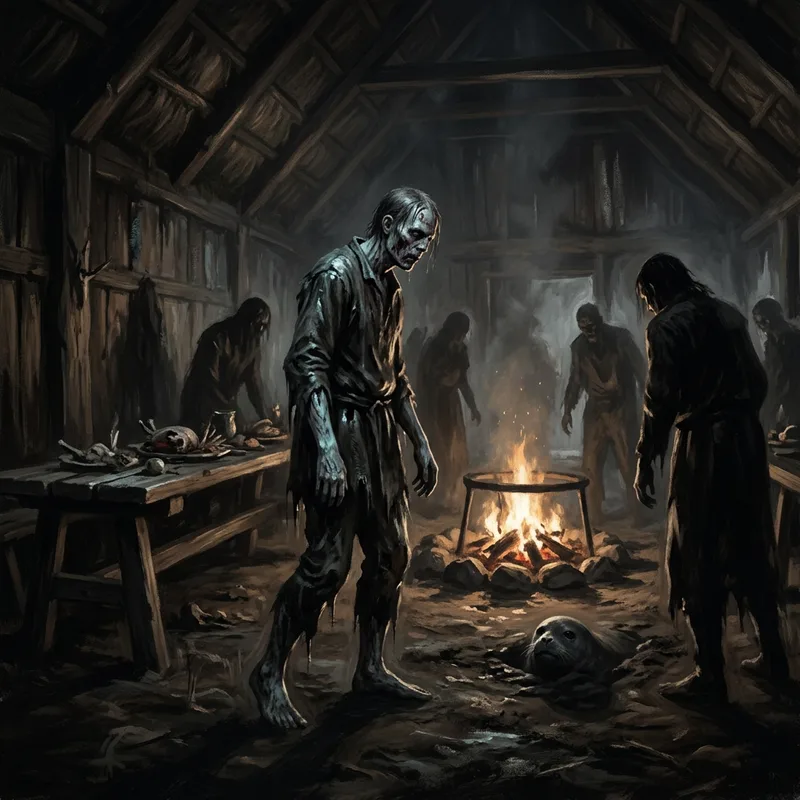
Akta nr 024 z 446
The dead of Fróðá
Znany też jako: Fróðá wonders, Fróðárundur, Frodis-water hauntings
The Fróðá episode of Eyrbyggja saga is the nearest thing in medieval literature to a zombie outbreak. One death leads to another, the dead return in growing numbers and they occupy the farmhouse, crowding out the living. The solution is distinctively Icelandic: the revenants are prosecuted under common law at the door of the house, accept the verdict and walk out, after which a priest purifies the building. It combines epidemic logic with a legal system that even the dead obey.12
Pierwsza wzmianka
1260
Eyrbyggja saga, written in the mid- or late 13th centuryPochodzenie
Norse (Icelandic saga)
IslandiaCo je wywołuje
Inne
Death spreads through a household after the dying wishes of a woman named Thorgunna are ignored; each new victim joins the walking dead.Jak się nim zostaje
Members of the household sicken and die after meeting the dead shepherd, then return themselves.
Jak się porusza
Powłóczy nogami
The dead walk into the hall in a body each night, sit down by the fire and shake mud from their clothes over the living.Inteligencja
Trochę inteligencji
Słabe punkty
- a formal lawsuit at the door of the house, sentencing each revenant to leave
- holy water and Christian rites
Kiedy pojawił się po raz pierwszy?
Świat starożytnyŚredniowieczeOd 1500 do 1899Od 1900 do 1967Od 1968 do 1999Od 2000 do 2009Od 2010 do dziś 1260
1260
1260Eyrbyggja saga, written in the mid- or late 13th century
notatki terenowe
Co mówią źródła
Czy dałbyś radę uciec?
Klasa prędkości na podstawie opisu w źródłach (powłóczy nogami), a nie pomiar.
The dead of Fróðá około 3 km/h (1.9 mph)
Ty, idący około 5 km/h (3.1 mph)

Ty, biegnący około 10 km/h (6.2 mph)

Sprintujący dorosły w formie około 24 km/h (15 mph)

Szybki rowerzysta około 37 km/h (23 mph)

Źródła
Każdy fakt na tej stronie pochodzi z tych źródeł, opisany naszymi słowami. Znalazłeś błąd? Napisz na [email protected].
 Draugr
 Glámr
Glámr Asvith
 Deacon of Myrká
 Haugbúi
 Hjaðningavíg
 Vetala
 Revenant (medieval England)
 Upiór
Upiór Berwick revenant
 Buckinghamshire revenant
 Byland Abbey revenants