
 Sombi wo ni ọ́?
 Ìjà sombi
 Sá fún wọn
 Àkójọ káàdì
 Èdè: Yorùbá
 Fún agbo náà ní oúnjẹ (ìgò ẹ̀bùn)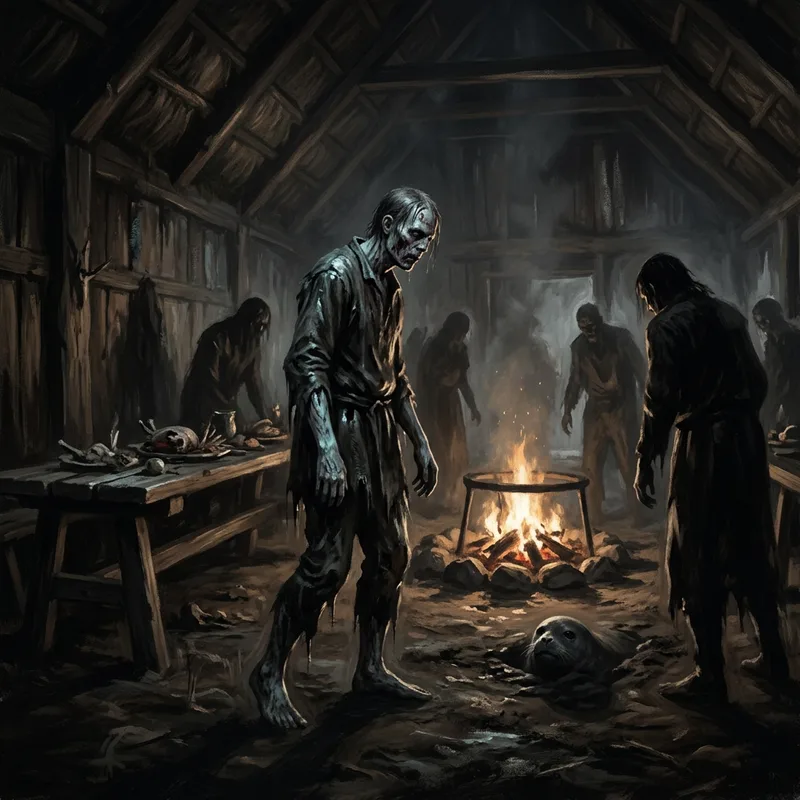
Fáìlì Nọ́ńbà 024 nínú 446
The dead of Fróðá
A tún ń pè é ní: Fróðá wonders, Fróðárundur, Frodis-water hauntings
The Fróðá episode of Eyrbyggja saga is the nearest thing in medieval literature to a zombie outbreak. One death leads to another, the dead return in growing numbers and they occupy the farmhouse, crowding out the living. The solution is distinctively Icelandic: the revenants are prosecuted under common law at the door of the house, accept the verdict and walk out, after which a priest purifies the building. It combines epidemic logic with a legal system that even the dead obey.12
Ìgbà àkọ́kọ́ tí a kọ sílẹ̀
1260
Eyrbyggja saga, written in the mid- or late 13th centuryOrírun
Norse (Icelandic saga)
IcelandOhun tó fà á
Òmíràn
Death spreads through a household after the dying wishes of a woman named Thorgunna are ignored; each new victim joins the walking dead.Bí o ṣe di ọ̀kan
Members of the household sicken and die after meeting the dead shepherd, then return themselves.
Bí ó ṣe ń rìn
Ó ń ṣubú lọ
The dead walk into the hall in a body each night, sit down by the fire and shake mud from their clothes over the living.Làákàyè
Làákàyè díẹ̀
Àwọn ibi tó lẹ̀
- a formal lawsuit at the door of the house, sentencing each revenant to leave
- holy water and Christian rites
Ìgbà wo ló kọ́kọ́ farahàn?
 1260
1260Eyrbyggja saga, written in the mid- or late 13th century
àkọsílẹ̀ pápá
Ohun tí àwọn orísun sọ
Ṣé o lè sá fún un?
Ẹ̀ka ìyára láti bí àwọn orísun ṣe ṣàpèjúwe rẹ̀ (ó ń ṣubú lọ), kì í ṣe ìwọ̀n.
The dead of Fróðá nǹkan bí 3 km/h (1.9 mph)
Ìwọ, ní rírìn nǹkan bí 5 km/h (3.1 mph)

Ìwọ, ní eré òwúrọ̀ nǹkan bí 10 km/h (6.2 mph)

Àgbàlagbà alágbára tó ń sáré nǹkan bí 24 km/h (15 mph)

Ẹni tó ń gun kẹ̀kẹ́ lákọ̀ọ́kọ̀ nǹkan bí 37 km/h (23 mph)

Àwọn orísun
Gbogbo òtítọ́ lórí ojú ewé yìí wá láti àwọn orísun wọ̀nyí, a kọ ọ́ ní ọ̀rọ̀ tiwa. Ṣé o rí àṣìṣe? Sọ fún wa ní [email protected].
 Draugr
 Glámr
Glámr Asvith
 Deacon of Myrká
 Haugbúi
 Hjaðningavíg
 Vetala
 Revenant (medieval England)
 Upiór
Upiór Berwick revenant
 Buckinghamshire revenant
 Byland Abbey revenants