
 O zombie efe?
 Ntwa ya di-zombie
 Siana o ba fete
 Kgobokanyo ya dikarata
 Puo: Setswana
 Fepa letshwititi (nkgwana ya madi a tebogo)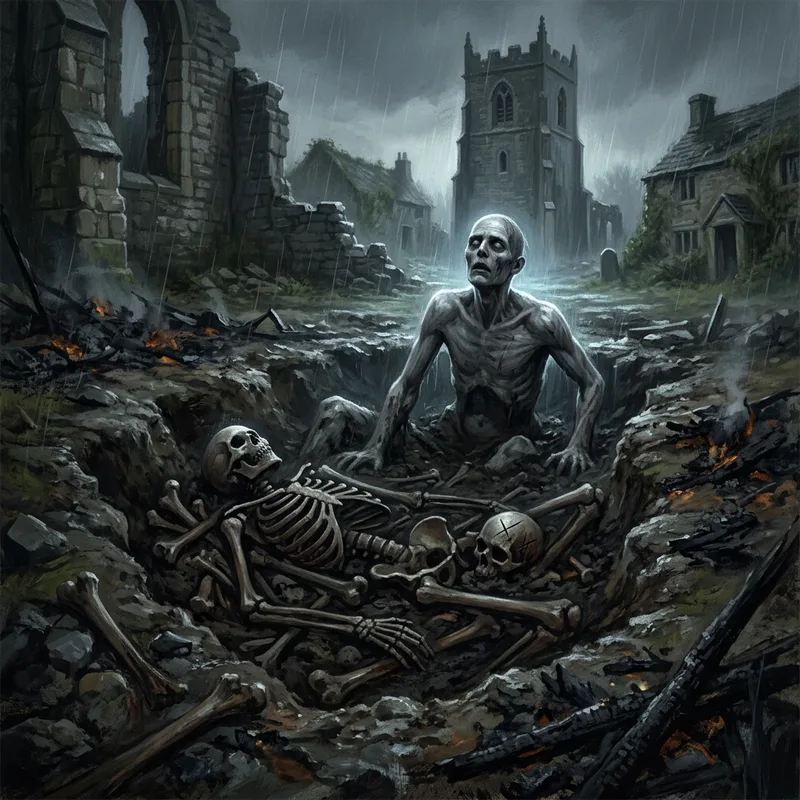
Faele Nom. 013 ya 446
Wharram Percy mutilated dead
Gape e bidiwa: Wharram Percy revenants
At the deserted medieval village of Wharram Percy in Yorkshire, archaeologists identified human remains that had been beheaded, cut up and burned after death. The 2017 study by Historic England and the University of Southampton concluded that the likeliest explanation was fear of revenants. If so, it is physical evidence from England for the practices that chroniclers such as William of Newburgh describe. It shows ordinary villagers acting on the belief that corpses could rise.12
E kwadilwe la ntlha
1100
Bones dated to the 11th-14th centuries; analysed in a study published in 2017Tshimologo
Medieval English
Bogosi jo bo KopanengSe se e bakang
Ga go a tlhalosiwa le ka motlha
Why these individuals were singled out is not known.Bokoa
- decapitation
- dismemberment
- burning
- breaking the long bones after death
E tlhagile la ntlha leng?
Lefatshe la bogologoloMotlha wa Bogare1500 go ya go 18991900 go ya go 19671968 go ya go 19992000 go ya go 20092010 go fitlha gompieno 1100
1100
1100Bones dated to the 11th-14th centuries; analysed in a study published in 2017
dikwalo tsa patlisiso
Se metswedi e se buang
Metswedi
- Medieval villagers warded off 'zombies' by burning and mutilating human remains, study finds - ScienceAlert
- Revenant - Wikipedia
Ntlha nngwe le nngwe mo tsebeng e e tswa mo metsweding e, e kwadilwe ka mafoko a rona. O bone phoso? Re bolelele kwa [email protected].
 Abhartach
 Revenant (medieval England)
 Berwick revenant
 Buckinghamshire revenant
 Byland Abbey revenants
 Drakelow revenants
 Draugr
 Vetala
 Glámr
Glámr Upiór
Upiór Asvith
 Haugbúi