
 Ban zombie nga?
 Xeexu zombie
 Raw leen
 Dajaleb kàrt
 Làkk: Wolof
 Leel mbooloo mi (ndimbalu xaalis)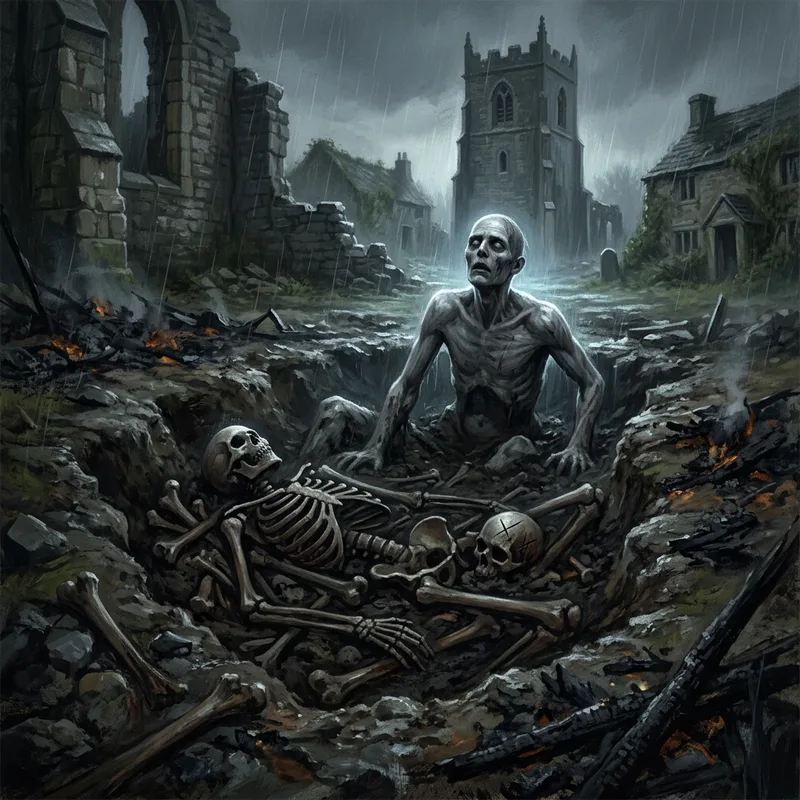
Kayit No. 013 ci 446
Wharram Percy mutilated dead
Ñu ngi koy wooye itam: Wharram Percy revenants
At the deserted medieval village of Wharram Percy in Yorkshire, archaeologists identified human remains that had been beheaded, cut up and burned after death. The 2017 study by Historic England and the University of Southampton concluded that the likeliest explanation was fear of revenants. If so, it is physical evidence from England for the practices that chroniclers such as William of Newburgh describe. It shows ordinary villagers acting on the belief that corpses could rise.12
Jëkk a bindu
1100
Bones dated to the 11th-14th centuries; analysed in a study published in 2017Cosaan
Medieval English
ÀngalteerLan moo ko waral
Kenn leeralul ko mukk
Why these individuals were singled out is not known.Fi mu néewe doole
- decapitation
- dismemberment
- burning
- breaking the long bones after death
Kañ la jëkk a feeñ?
 1100
1100Bones dated to the 11th-14th centuries; analysed in a study published in 2017
notu gëstu
Li sours yi wax
Sours yi
- Medieval villagers warded off 'zombies' by burning and mutilating human remains, study finds - ScienceAlert
- Revenant - Wikipedia
Xibaar bu nekk ci xët wii jóge na ci sours yii, te nu bind ko ak sunu kàddu. Gis nga njuumte? Wax nu ko ci [email protected].
 Abhartach
 Revenant (medieval England)
 Berwick revenant
 Buckinghamshire revenant
 Byland Abbey revenants
 Drakelow revenants
 Draugr
 Vetala
 Glámr
Glámr Upiór
Upiór Asvith
 Haugbúi