
 Sombi wo ni ọ́?
 Ìjà sombi
 Sá fún wọn
 Àkójọ káàdì
 Èdè: Yorùbá
 Fún agbo náà ní oúnjẹ (ìgò ẹ̀bùn)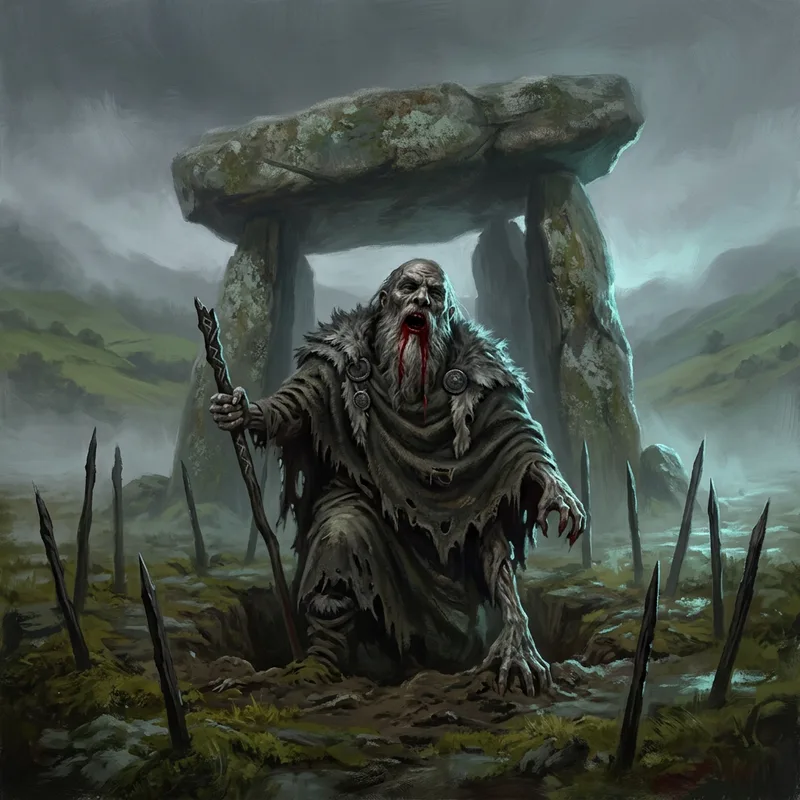
Fáìlì Nọ́ńbà 056 nínú 446
Abhartach
A tún ń pè é ní: Avartagh, neamh-mairbh
Abhartach is a dwarf sorcerer-king of Ulster legend who would not stay buried. In the version Joyce printed in 1870 he is killed and interred upright three times, and only burial head-down ends his returns. The blood-drinking and the term 'walking dead' belong to later tellings, especially Bob Curran's. The story is regularly proposed as an Irish source for Dracula, though the claim remains speculative.12
Ìgbà àkọ́kọ́ tí a kọ sílẹ̀
1870
First recorded by Patrick Weston Joyce in The Origin and History of Irish Names of Places (1870)Orírun
Irish
United Kingdom, IrelandOhun tó fà á
Oṣó
He was a magician in life, and his own powers bring him back from the grave.Bí o ṣe di ọ̀kan
A dwarf tyrant and sorcerer killed by a neighbouring chieftain and buried standing upright.
Làákàyè
Ọlọ́gbọ́n
Àwọn ibi tó lẹ̀
- burial head downwards
- a sword of yew wood (modern versions)
- thorns around the grave and a great stone on top (modern versions)
Ìgbà wo ló kọ́kọ́ farahàn?
 1870
1870First recorded by Patrick Weston Joyce in The Origin and History of Irish Names of Places (1870)
àkọsílẹ̀ pápá
Ohun tí àwọn orísun sọ
Àwọn orísun
Gbogbo òtítọ́ lórí ojú ewé yìí wá láti àwọn orísun wọ̀nyí, a kọ ọ́ ní ọ̀rọ̀ tiwa. Ṣé o rí àṣìṣe? Sọ fún wa ní [email protected].
 Revenant (medieval England)
 Berwick revenant
 Buckinghamshire revenant
 Byland Abbey revenants
 Dearg Due
 Drakelow revenants
 Jiangshi
 Zombi (Haitian)
 Strigoi
 Vampir (South Slavic)
 Arnold Paole
 Churel