
 Którym zombie jesteś?
 Bitwa zombie
 Uciec przed nimi
 Kolekcja kart
 Język: Polski
 Nakarm hordę (słoik na napiwki)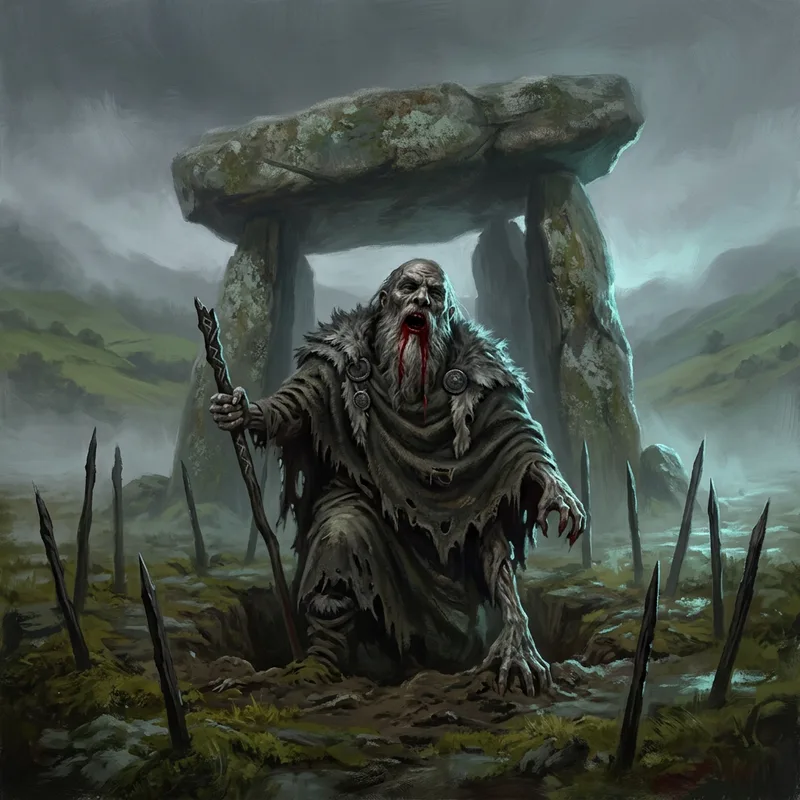
Akta nr 056 z 446
Abhartach
Znany też jako: Avartagh, neamh-mairbh
Abhartach is a dwarf sorcerer-king of Ulster legend who would not stay buried. In the version Joyce printed in 1870 he is killed and interred upright three times, and only burial head-down ends his returns. The blood-drinking and the term 'walking dead' belong to later tellings, especially Bob Curran's. The story is regularly proposed as an Irish source for Dracula, though the claim remains speculative.12
Pierwsza wzmianka
1870
First recorded by Patrick Weston Joyce in The Origin and History of Irish Names of Places (1870)Pochodzenie
Irish
Wielka Brytania, IrlandiaCo je wywołuje
Czary
He was a magician in life, and his own powers bring him back from the grave.Jak się nim zostaje
A dwarf tyrant and sorcerer killed by a neighbouring chieftain and buried standing upright.
Inteligencja
Sprytny
Słabe punkty
- burial head downwards
- a sword of yew wood (modern versions)
- thorns around the grave and a great stone on top (modern versions)
Kiedy pojawił się po raz pierwszy?
Świat starożytnyŚredniowieczeOd 1500 do 1899Od 1900 do 1967Od 1968 do 1999Od 2000 do 2009Od 2010 do dziś 1870
1870
1870First recorded by Patrick Weston Joyce in The Origin and History of Irish Names of Places (1870)
notatki terenowe
Co mówią źródła
Źródła
Każdy fakt na tej stronie pochodzi z tych źródeł, opisany naszymi słowami. Znalazłeś błąd? Napisz na [email protected].
 Revenant (medieval England)
 Berwick revenant
 Buckinghamshire revenant
 Byland Abbey revenants
 Dearg Due
 Drakelow revenants
 Jiangshi
 Zombi (Haitian)
 Strigoi
 Vampir (South Slavic)
 Arnold Paole
 Churel