
 Che zombie sei?
 Battaglia tra zombie
 Seminarli
 Collezione di carte
 Lingua: Italiano
 Nutri l'orda (barattolo delle mance)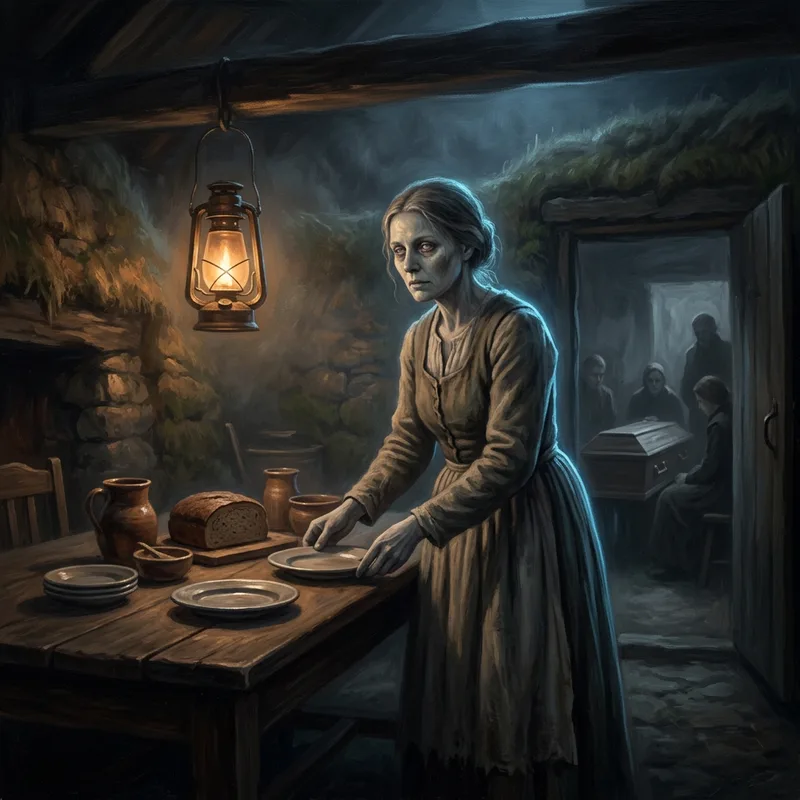
Fascicolo n. 025 di 446
Þórgunna
Detto anche: Thorgunna
Þórgunna is the unusual saga corpse that rises to help rather than to kill. During an overnight halt on the way to her burial, her body gets up, lays the table and cooks a meal for the bearers, then vanishes when the farmer speaks to her. The scene is eerie rather than violent, but it opens the chain of deaths at Fróðá. It shows the saga dead as people with unfinished business and the physical means to settle it.12
Prima attestazione
1260
Eyrbyggja saga, written in the mid- or late 13th centuryOrigine
Norse (Icelandic saga)
IslandaCosa lo causa
Altro
Her dying instructions are only partly carried out, and her corpse acts on its own behalf on the way to burial.Come lo si diventa
A wealthy seafaring woman who asks to be buried at Skálholt and to have her bedding burned; the bedding is kept.
Come si muove
Arranca
The corpse gets up during an overnight halt, walks into the kitchen and prepares a meal.Intelligenza
Un po' di intelligenza
Punti deboli
- burial in the place she asked for
- holy water sprinkled on the food she prepared
Quando è comparso per la prima volta?
Mondo antico
Medioevo
Dal 1500 al 1899
Dal 1900 al 1967
Dal 1968 al 1999
Dal 2000 al 2009
Dal 2010 a oggi
 1260
1260Eyrbyggja saga, written in the mid- or late 13th century
appunti sul campo
Cosa dicono le fonti
Riusciresti a seminarlo?
Classe di velocità dalla descrizione delle fonti (arranca), non una misura.
Þórgunna circa 3 km/h (1.9 mph)
Tu, che cammini circa 5 km/h (3.1 mph)

Tu, che corri circa 10 km/h (6.2 mph)

Un adulto allenato in sprint circa 24 km/h (15 mph)

Un ciclista veloce circa 37 km/h (23 mph)

Fonti
Ogni fatto di questa pagina viene da queste fonti, riscritto con parole nostre. Hai visto un errore? Scrivici a [email protected].
 Draugr
 Glámr
Glámr Asvith
 Deacon of Myrká
 Haugbúi
 Hjaðningavíg
 Vetala
 Revenant (medieval England)
 Upiór
Upiór Berwick revenant
 Buckinghamshire revenant
 Byland Abbey revenants