
 Sombi wo ni ọ́?
 Ìjà sombi
 Sá fún wọn
 Àkójọ káàdì
 Èdè: Yorùbá
 Fún agbo náà ní oúnjẹ (ìgò ẹ̀bùn)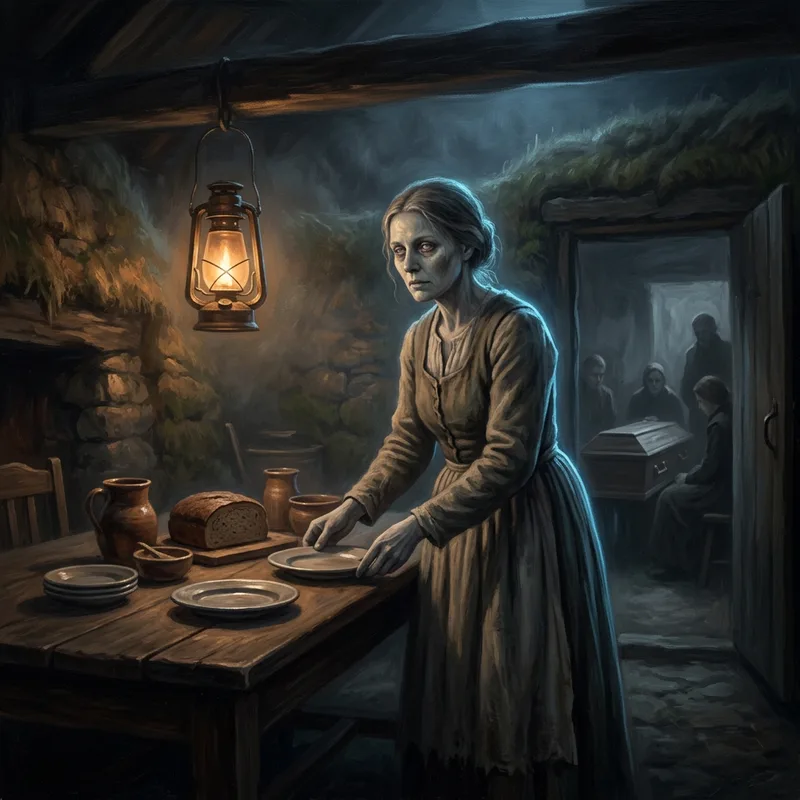
Fáìlì Nọ́ńbà 025 nínú 446
Þórgunna
A tún ń pè é ní: Thorgunna
Þórgunna is the unusual saga corpse that rises to help rather than to kill. During an overnight halt on the way to her burial, her body gets up, lays the table and cooks a meal for the bearers, then vanishes when the farmer speaks to her. The scene is eerie rather than violent, but it opens the chain of deaths at Fróðá. It shows the saga dead as people with unfinished business and the physical means to settle it.12
Ìgbà àkọ́kọ́ tí a kọ sílẹ̀
1260
Eyrbyggja saga, written in the mid- or late 13th centuryOrírun
Norse (Icelandic saga)
IcelandOhun tó fà á
Òmíràn
Her dying instructions are only partly carried out, and her corpse acts on its own behalf on the way to burial.Bí o ṣe di ọ̀kan
A wealthy seafaring woman who asks to be buried at Skálholt and to have her bedding burned; the bedding is kept.
Bí ó ṣe ń rìn
Ó ń ṣubú lọ
The corpse gets up during an overnight halt, walks into the kitchen and prepares a meal.Làákàyè
Làákàyè díẹ̀
Àwọn ibi tó lẹ̀
- burial in the place she asked for
- holy water sprinkled on the food she prepared
Ìgbà wo ló kọ́kọ́ farahàn?
 1260
1260Eyrbyggja saga, written in the mid- or late 13th century
àkọsílẹ̀ pápá
Ohun tí àwọn orísun sọ
Ṣé o lè sá fún un?
Ẹ̀ka ìyára láti bí àwọn orísun ṣe ṣàpèjúwe rẹ̀ (ó ń ṣubú lọ), kì í ṣe ìwọ̀n.
Þórgunna nǹkan bí 3 km/h (1.9 mph)
Ìwọ, ní rírìn nǹkan bí 5 km/h (3.1 mph)

Ìwọ, ní eré òwúrọ̀ nǹkan bí 10 km/h (6.2 mph)

Àgbàlagbà alágbára tó ń sáré nǹkan bí 24 km/h (15 mph)

Ẹni tó ń gun kẹ̀kẹ́ lákọ̀ọ́kọ̀ nǹkan bí 37 km/h (23 mph)

Àwọn orísun
Gbogbo òtítọ́ lórí ojú ewé yìí wá láti àwọn orísun wọ̀nyí, a kọ ọ́ ní ọ̀rọ̀ tiwa. Ṣé o rí àṣìṣe? Sọ fún wa ní [email protected].
 Draugr
 Glámr
Glámr Asvith
 Deacon of Myrká
 Haugbúi
 Hjaðningavíg
 Vetala
 Revenant (medieval England)
 Upiór
Upiór Berwick revenant
 Buckinghamshire revenant
 Byland Abbey revenants