
 당신은 어떤 좀비?
 좀비 대결
좀비 대결 달려서 따돌리기
 카드 컬렉션
 언어: 한국어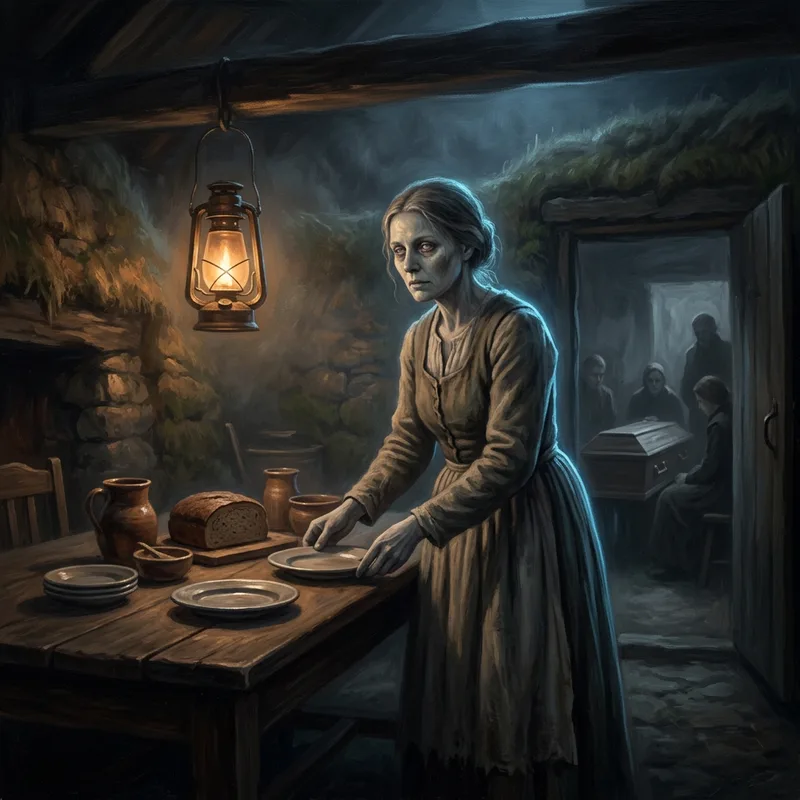
파일 025번 / 총 446개
Þórgunna
다른 이름: Thorgunna
Þórgunna is the unusual saga corpse that rises to help rather than to kill. During an overnight halt on the way to her burial, her body gets up, lays the table and cooks a meal for the bearers, then vanishes when the farmer speaks to her. The scene is eerie rather than violent, but it opens the chain of deaths at Fróðá. It shows the saga dead as people with unfinished business and the physical means to settle it.12
첫 기록
1260
Eyrbyggja saga, written in the mid- or late 13th century기원
Norse (Icelandic saga)
아이슬란드원인
기타
Her dying instructions are only partly carried out, and her corpse acts on its own behalf on the way to burial.어떻게 좀비가 되나
A wealthy seafaring woman who asks to be buried at Skálholt and to have her bedding burned; the bedding is kept.
움직이는 방식
어슬렁거림
The corpse gets up during an overnight halt, walks into the kitchen and prepares a meal.지능
약간의 지능
약점
- burial in the place she asked for
- holy water sprinkled on the food she prepared
처음 등장한 건 언제일까요?
고대 세계
중세
1500~1899년
1900~1967년
1968~1999년
2000~2009년
2010년~현재
 1260
1260Eyrbyggja saga, written in the mid- or late 13th century
현장 노트
출처가 말하는 것
도망칠 수 있었을까요?
속도 등급은 출처의 묘사(어슬렁거림)에 따른 것이며 실측값이 아닙니다.
Þórgunna 약 3 km/h (1.9 mph)
당신, 걷기 약 5 km/h (3.1 mph)

당신, 조깅 약 10 km/h (6.2 mph)

전력 질주하는 건강한 성인 약 24 km/h (15 mph)

빠른 자전거 라이더 약 37 km/h (23 mph)

출처
이 페이지의 모든 사실은 이 출처들에서 가져왔으며, 우리 말로 새로 썼습니다. 오류를 발견하셨나요? [email protected]로 알려 주세요.
 Draugr
 Glámr
Glámr Asvith
 Deacon of Myrká
 Haugbúi
 Hjaðningavíg
 Vetala
 Revenant (medieval England)
 Upiór
Upiór Berwick revenant
 Buckinghamshire revenant
 Byland Abbey revenants